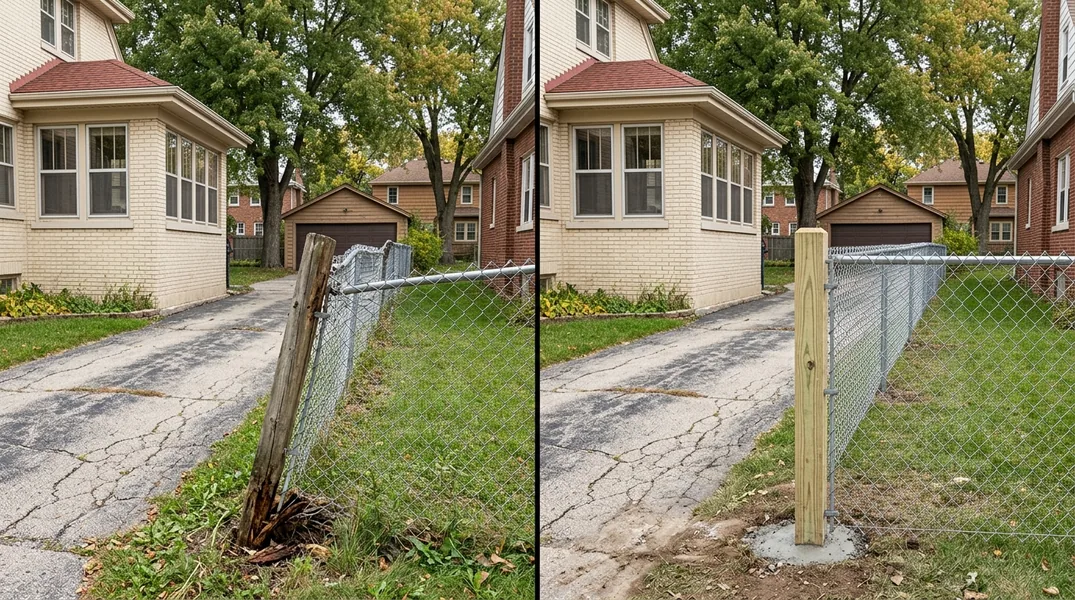
Why Your Fence Leans: The Milwaukee Winter Effect
If you've noticed your fence leaning to one side after winter, you're not alone. Homeowners throughout Milwaukee and surrounding areas frequently discover this problem once the snow melts and spring arrives. A leaning fence is more than just an eyesore; it's a sign that your fence has experienced structural stress that requires attention. Understanding what causes this shift is the first step toward preventing future damage and knowing when to call a professional.
The Midwest climate creates a perfect storm for fence problems. Wisconsin's freeze-thaw cycles, heavy seasonal moisture, and clay-rich soil combine to create conditions that challenge even well-built fences. When you understand the root causes of leaning fences, you can make informed decisions about maintenance, repair, and whether your fence needs professional intervention.
Frost Heave: The Hidden Force Pushing Your Fence Posts
Frost heave is the primary culprit behind leaning fences in Wauwatosa, West Allis, and other Milwaukee-area communities. This natural phenomenon occurs when water in the soil freezes and expands, creating upward pressure on anything embedded in the ground, including fence posts. As temperatures drop below freezing, water molecules expand by approximately 9 percent, and this expansion happens repeatedly throughout the winter season. Each freeze-thaw cycle pushes your fence posts slightly upward, and over time, this cumulative movement can shift posts several inches out of their original position.
The problem worsens if your fence posts aren't installed deep enough or if drainage around the posts is poor. Posts installed at the minimum depth of 2 to 3 feet are more susceptible to frost heave than those set deeper into the earth. Additionally, if water collects around the base of your posts or if your yard has poor drainage, more moisture freezes around the posts, amplifying the heaving effect. By spring, what was once a perfectly vertical post may now be tilted, causing the entire fence line to appear uneven or leaning. This is why proper installation depth and drainage considerations are critical components of Wood & Privacy Fence Installation.
Clay Soil and Moisture: Why Milwaukee Yards Are Vulnerable
Milwaukee's soil composition plays a significant role in fence problems. Much of the region sits on clay-based soil, which has different properties than sandy or loamy soil. Clay holds moisture far longer than other soil types, and this moisture retention is exactly what makes frost heave so severe in our area. When clay soil becomes saturated with water during fall and winter, that water has nowhere to go. It remains trapped around your fence posts, and when temperatures plummet, all that moisture freezes simultaneously, creating tremendous pressure.
The clay also becomes harder and more compacted as it freezes, which means your fence posts can't settle back to their original position when the ground thaws in spring. Instead, the posts remain lifted, leaving gaps between the post and the surrounding soil. This creates additional problems: water can seep into these gaps, accelerating wood rot and decay. If you have Wood & Privacy Fence Installation, this moisture penetration is particularly concerning because wood is susceptible to rot when consistently exposed to moisture. Understanding your soil type and ensuring proper drainage around your fence posts can significantly extend the life of your fence and prevent the leaning that plagues many Greenfield and Milwaukee-area properties.
Rotted Posts: When Leaning Becomes a Safety Issue
A leaning fence caused by frost heave is problematic, but a leaning fence with rotted posts is dangerous. Rotted wood loses its structural integrity, and a post that appears solid on the surface may be soft and crumbling internally. This combination of frost heave pressure and internal rot creates a fence that can fail suddenly, potentially collapsing without warning. Rotted posts won't hold the weight and tension of the fence panels, and they're far more likely to snap or give way completely.
Rot typically begins at the base of the post, where it meets the soil and where moisture is most concentrated. The freeze-thaw cycle accelerates this process by repeatedly pushing water into the wood fibers, then allowing it to freeze and expand. Over several winters, this cycle can compromise 6 to 12 inches of the post's lower section. If your fence has been leaning for more than one season, it's essential to inspect the posts for signs of rot, including soft spots, discoloration, or visible decay. If you discover rotted wood, contact Milwaukee Fence Company for a free estimate on fence post replacement. Continuing to delay repairs puts your family, pets, and neighbors at risk.
Fence Post Repair and Replacement: When to Call a Professional
Not every leaning fence requires complete replacement. Sometimes, strategic fence post repair can resolve the issue and restore your fence to vertical alignment. However, determining what approach is right for your situation requires professional assessment. A leaning fence caused solely by frost heave might be corrected by resetting the posts deeper or improving drainage, whereas a fence with rotted posts will need fence post replacement to ensure lasting stability.
Milwaukee Fence Company specializes in diagnosing fence problems and recommending the most cost-effective solutions. During an inspection, we evaluate the extent of post damage, the degree of leaning, and the underlying causes. If posts are sound but shifted, we can often reset them and reinforce the installation to prevent future heave. If posts are rotted or severely compromised, we'll recommend fence post replacement to restore structural integrity and safety. The sooner you address a leaning fence, the fewer additional problems you'll face and the lower your overall repair costs will be. Call us at (414) 255-7847 to schedule an evaluation.
Prevention and Long-Term Fence Maintenance in Milwaukee
The best approach to avoiding leaning fences is prevention. If you're planning new Wood & Privacy Fence Installation or considering fence repairs, several preventive measures can extend your fence's life and prevent frost heave issues. Posts should be set at least 3 feet deep, and ideally deeper in areas with severe clay soil. The post hole should be dug below the frost line, which in Wisconsin is typically 36 to 48 inches deep depending on your specific location. Additionally, ensure proper drainage around posts by grading soil away from the fence line and considering perforated drain tile in areas where water collects.
Regular maintenance also plays a crucial role in fence longevity. Inspect your fence annually for signs of leaning, rot, or damage. If you notice posts beginning to shift, address it immediately rather than waiting for the problem to worsen. Applying wood sealant to Wood & Privacy Fence Installation can slow moisture penetration and reduce rot risk. For homeowners in Milwaukee looking to avoid costly repairs, these preventive steps are far more economical than addressing severe damage after multiple winters have taken their toll. Milwaukee Fence Company can help you develop a maintenance plan tailored to your property and fence type. Contact us at (414) 255-7847 or request a free estimate to discuss your fence's specific needs.
Looking for a professional tree service in Milwaukee? Milwaukee Fence Company responds fast for all your fence needs.
Get a Free Quote